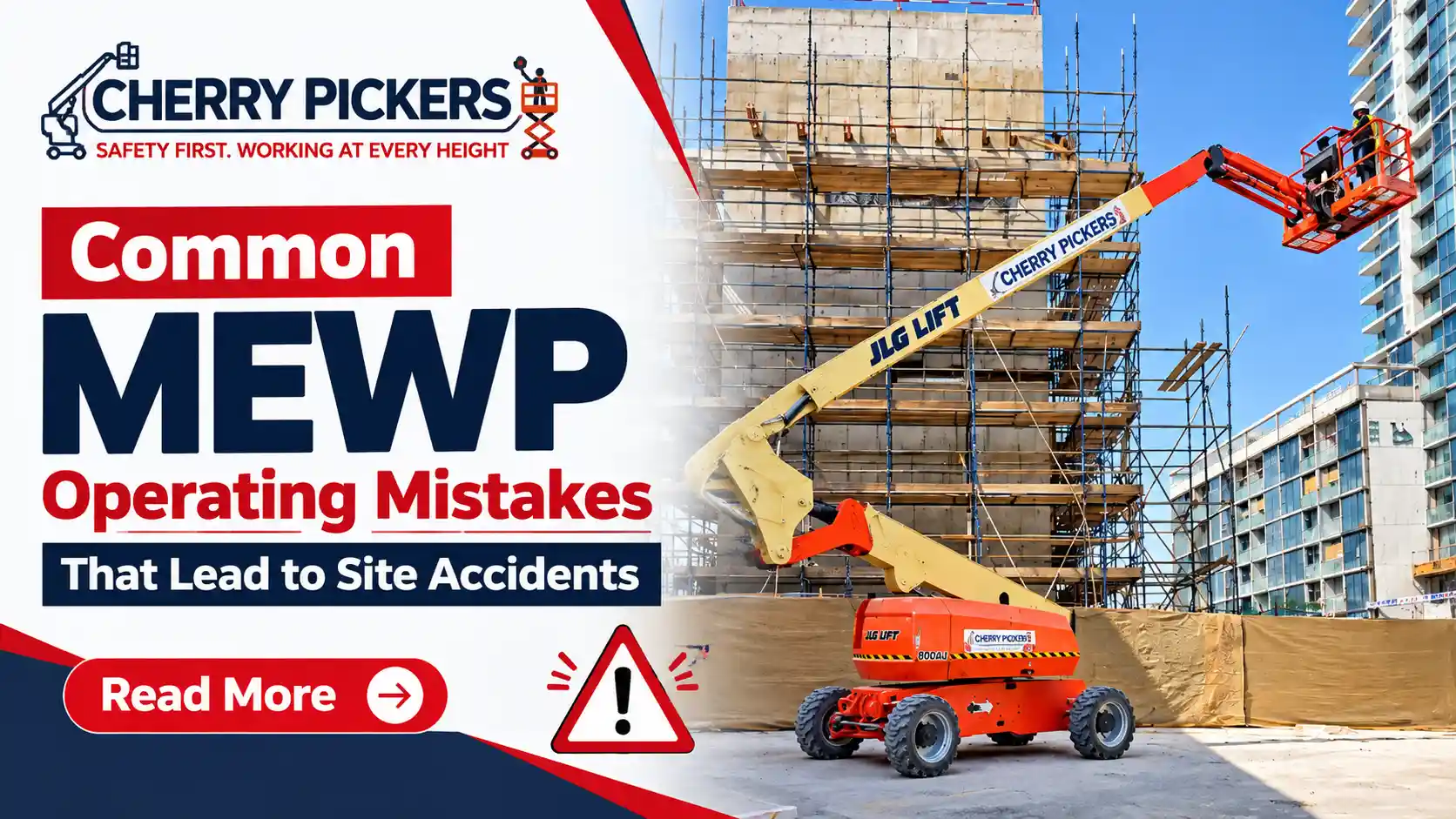
Common MEWP Operating Mistakes That Lead to Site Accidents
Mobile Elevating Work Platforms (MEWPs), including boom lifts and scissor lifts, are widely used in construction, maintenance and industrial projects. They help workers reach elevated areas, but improper operation can cause serious site accidents.
Many incidents happen because of avoidable mistakes, such as overloading the platform, ignoring ground conditions or skipping safety checks. Understanding these risks can help operators, contractors and site supervisors maintain a safer working environment.
1. Overloading the Platform
Every MEWP has a maximum weight limit that includes the operator, tools and materials. Exceeding this limit can affect the machine's stability and increase the risk of an accident.
Operators should check the platform's permitted capacity before starting work. They should also account for everything being carried and remove unnecessary materials before adding more equipment.
2. Operating on Unsafe Ground
Ground conditions play an important role in the safe operation of a MEWP. Soft soil, uneven surfaces, slopes and hidden underground spaces can affect the machine's stability.
Before positioning the equipment, check the work area for potential hazards, including drains, trenches and weak surfaces. Where required, ensure stabilisers or outriggers are correctly positioned on suitable ground.
Never assume that a surface is safe simply because it looks flat or solid.
3. Working Too Close to Overhead Hazards
Power lines, ceilings, beams and other overhead obstacles can create serious risks when operating a boom lift or scissor lift.
Operators should inspect the surrounding area before raising or moving the platform. They must maintain the required safe distance from electrical lines and watch for obstacles throughout the task, not just at the beginning.
Careful planning and awareness of the work area can help prevent collisions and electrical accidents.
4. Moving the Machine with the Platform Raised
Moving a MEWP while its platform is elevated can increase the risk of collisions, instability and tip-overs, particularly on uneven ground.
Some machines permit limited movement at height under specific conditions. Operators must follow the manufacturer's instructions and site safety procedures rather than treating elevated travel as a shortcut.
Whenever necessary, lower the platform before moving the machine.
5. Skipping Pre-Use Safety Inspections
A machine that worked correctly yesterday may not be safe to use today. Damaged guardrails, leaking hydraulic components, worn tyres or faulty controls can create hazards during operation.
Operators should complete the required pre-use inspection before operating the equipment. Any defects must be reported, and unsafe equipment should not be used until the issue has been addressed.
Regular checks help identify problems before they lead to accidents.
6. Using Fall Protection Incorrectly
Fall protection is an important part of working safely at height. The correct requirements depend on the type of MEWP, the manufacturer's instructions and the applicable site procedures.
For boom lifts, operators may be required to use an appropriate harness and lanyard attached to the designated anchor point. Incorrect attachment or unsuitable equipment can reduce protection during sudden platform movement.
Always follow the machine's instructions and the site's fall-protection requirements. Never attach a lanyard to an unauthorised point.
7. Operating Without Proper Training
Operating a MEWP without suitable training can increase the risk of mistakes. Operators need to understand the machine's controls, operating limits, safety features and emergency procedures.
Employers and site supervisors should ensure operators have the appropriate training and authorisation for the equipment they use. Additional familiarisation may also be necessary when operating an unfamiliar machine.
Proper training helps operators recognise hazards and respond appropriately.
8. Ignoring Weather Conditions
Strong winds, lightning and other adverse weather conditions can make working at height dangerous, particularly outdoors.
Before starting work, check the weather and the machine's permitted operating conditions. Stop operation when conditions exceed the manufacturer's limits or create an unsafe working environment.
Following weather-related safety procedures is essential for protecting operators and other workers on site.
How to Prevent MEWP Operating Accidents
Preventing accidents starts with proper planning and consistent safety practices. Operators, contractors and site supervisors should focus on the following measures:
- Provide proper training: Ensure operators are trained and authorised to use the equipment.
- Inspect equipment before use: Check the machine before operation and report any defects.
- Assess ground conditions: Identify uneven surfaces, weak ground and other site hazards.
- Follow operating instructions: Use the equipment according to the manufacturer's guidance.
- Use appropriate fall protection: Follow the requirements for the specific machine and task.
- Avoid unsafe shortcuts: Never allow time pressure to override essential safety procedures.
Consistent attention to these measures can help reduce risks and support safer working-at-height operations.
Choosing the right boom lift is essential for maintaining safety, efficiency, and productivity on your worksite. Consider the required working height, horizontal outreach, ground conditions, and site accessibility before selecting equipment for your project.
At Cherry Pickers Equipment Rentals & Maintenance LLC, we provide boom lift rental solutions in Dubai and across the UAE for construction, maintenance, industrial, and facility management projects. Our team can help you identify suitable access equipment based on your site requirements.
Contact us today to discuss your project and find the right boom lift for your needs.
Call us: +971-561018428
Explore our equipment: www.cherrypickersglobal.com
Frequently Asked Questions
What are the common causes of MEWP accidents?
Common contributing factors include unsafe ground conditions, overloading, inadequate training, skipped inspections and incorrect equipment operation.
Should a MEWP be inspected before every use?
Yes. Operators should complete the required pre-use checks before operating the machine and report any defects immediately.
Can a MEWP tip over on flat ground?
Yes. A surface may appear flat but still contain weak ground, hidden voids or other hazards that affect stability. The work area should be assessed before positioning the equipment.
Is operator training important for MEWP safety?
Yes. Proper training helps operators understand the equipment, recognise hazards and follow safe operating procedures. Training and authorisation requirements depend on the equipment and applicable site rules.
What should operators check before using a boom lift?
Operators should check the machine's condition, the work area, ground conditions, overhead hazards, weather and applicable safety requirements before starting work.