Electric vs Diesel MEWPs: Which Power Source Fits Your Site
A practical comparison of electric and diesel mobile elevating work platforms, covering emissions, noise, terrain, reach and running costs, to help you match the right power source to the job.
One of the first decisions when specifying a mobile elevating work platform is the power source. Electric or diesel is not a question of which is better in the abstract, but which fits the site in front of you. Get it right and the machine works quietly, cleanly and efficiently for the whole job. Get it wrong and you end up with a unit that cannot go where it is needed, or that sits idle waiting to recharge. This guide breaks down the real differences so you can specify with confidence, whether you are working at height indoors, outdoors, or across a mixed site.
The short answer
Electric MEWPs suit indoor, low-emission and noise-sensitive work on finished floors. Diesel MEWPs suit outdoor, rough-terrain and high-reach work on open ground. Most sites lean clearly one way, and the trouble only starts when a machine is chosen for its reach or price without checking whether its power source belongs in that environment. Bi-energy machines exist for exactly the sites that need both.
Electric MEWPs: clean, quiet and built for indoors
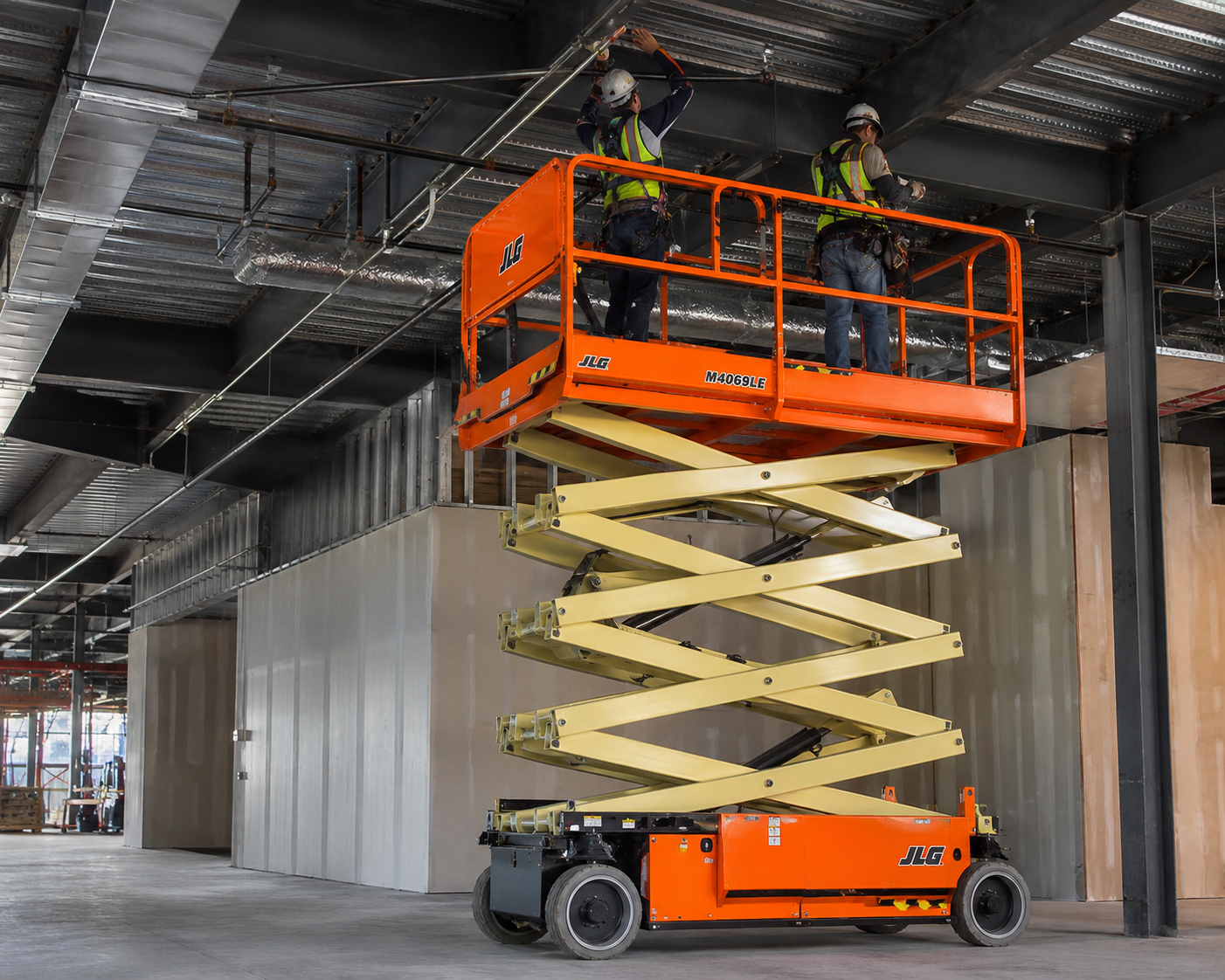
Electric boom lifts and scissor lifts run on battery power, which changes everything about where they can work. They produce zero emissions at the point of use and run quietly, so they are the natural choice for occupied buildings, warehouses, malls, hospitals, airports and any enclosed space where exhaust fumes would be a hazard. Paired with non-marking tyres, they work on finished retail and distribution floors without leaving a trace.
The trade-offs are real but manageable. Batteries need charging between shifts, so availability has to be planned around charging time. Electric machines are generally lighter and best suited to smooth, level surfaces rather than unprepared ground. In reach terms they cover compact to mid heights very well, which fits the indoor tasks they are built for. For most indoor maintenance, an electric boom lift or slab scissor lift is simply the correct tool.
- Zero emissions at point of use, safe for enclosed and occupied spaces.
- Low noise, suited to hospitals, retail, offices and night work.
- Non-marking tyres available for finished floors.
- Best on smooth, level slabs rather than rough ground.
- Requires charging time between shifts.
Diesel MEWPs: reach, power and rough-terrain capability
Diesel machines are built for the outdoors. They handle rough, uneven and unprepared ground that would defeat an electric unit, and they deliver the tallest working heights, which is why telescopic and larger articulated booms on construction and infrastructure sites are so often diesel. There is no charging downtime either. A diesel machine refuels on site and keeps working, which matters on long shifts and remote sites.
The limitations are the mirror image of their strengths. Diesel engines produce exhaust fumes, so they should never be used in enclosed spaces, and they are louder, which can be a problem near occupied buildings or during restricted hours. They are also heavier. For open-ground construction, facade work and high-reach access, though, a telescopic or articulated diesel boom lift is usually the machine that gets the job done.
- Rough-terrain capability on uneven, unprepared ground.
- Delivers the tallest working heights available.
- No charging downtime, refuels and keeps working.
- Produces exhaust fumes, not for enclosed spaces.
- Louder and heavier than electric equivalents.
Electric vs diesel at a glance
| Factor | Electric | Diesel |
|---|---|---|
| Environment | Indoors, finished floors, enclosed sites | Outdoors, open ground, rough terrain |
| Emissions | None at point of use | Exhaust fumes; not for enclosed areas |
| Noise | Quiet; hospitals, retail, night work | Louder; better suited to open sites |
| Terrain | Smooth, level slabs; non-marking tyres | Uneven, unprepared ground |
| Reach | Compact to mid working heights | Mid to very high reach |
| Downtime | Charging time between shifts | Refuel on site; keeps working |
Bi-energy: when a site needs both
Some sites do not fall cleanly on one side. A project might need a machine that starts outdoors on diesel and then moves indoors where fumes are not acceptable. Bi-energy boom lifts are built for this, running on diesel for outdoor and rough-terrain work and switching to electric for emission-free operation inside. For contractors juggling mixed environments on a single project, a bi-energy machine avoids hiring two units to cover one task.
How to choose for your site
Rather than starting from the badge or the power source, start from the site and let the environment point to the answer. Three questions settle most specifications.
- Indoors or outdoors? Enclosed or occupied space points to electricity. Open ground points to diesel.
- What is the ground like? Smooth, finished floors suit electric. Rough, unprepared terrain needs diesel.
- How high, and for how long? Very high reach and long uninterrupted shifts favour diesel. Compact to mid heights indoors favour electric.
If the honest answer is a mix of both, look at bi-energy. And whichever way the site points, the specification only works if the machine turns up in good condition, which is where the supplier matters as much as the power source. If you are unsure, our team can help you specify the right machine before you commit, so the wrong unit for the building does not become a machine that sits idle.
Frequently asked questions
Are electric or diesel MEWPs better?
Neither is better overall. Electric MEWPs suit indoor, low-emission and noise-sensitive work on smooth floors, while diesel MEWPs suit outdoor, rough-terrain and high-reach work on open ground. The right choice depends on the site, not the power source in isolation.
Can diesel boom lifts be used indoors?
Diesel boom lifts should not be used in enclosed spaces because they produce exhaust fumes. For indoor work, an electric machine or a bi-energy unit running in electric mode is the safe choice.
What is a bi-energy MEWP?
A bi-energy MEWP can run on both diesel and electric power. It works on diesel for outdoor and rough-terrain tasks and switches to electric for emission-free operation indoors, which suits projects that move between environments.
Do electric MEWPs have enough reach for construction?
Electric machines cover compact to mid working heights very well and handle most indoor and finished-site tasks. For the tallest working heights and rough outdoor terrain, diesel telescopic and articulated booms are usually the better fit.
Why Choose Cherry Pickers Equipment
Choosing the right power source is only half the decision. The other half is whether the machine arrives ready to work. Cherry Pickers Equipment offers a wide range of access equipment, from older year-of-manufacture models to the latest releases, so you can match both the specification and the budget. All machines are sourced from reputed rental fleets with strong maintenance histories, and more than 90% of the fleet is kept in rental-ready condition, fully functional and prepared for immediate deployment. With expert guidance on specification, proven expertise in global packing and worldwide delivery, and flexible financing for existing and frequent buyers, we make sourcing the right electric, diesel or bi-energy machine straightforward. Customer trust matters more to us than any single deal, which is why so much of our business comes from clients who come back.
Not sure whether electric or diesel fits your site? Browse the Cherry Pickers Equipment fleet or contact our team. We'll help you specify the right machine, delivered inspected and certified, ready to work across Dubai, Sharjah and Abu Dhabi.