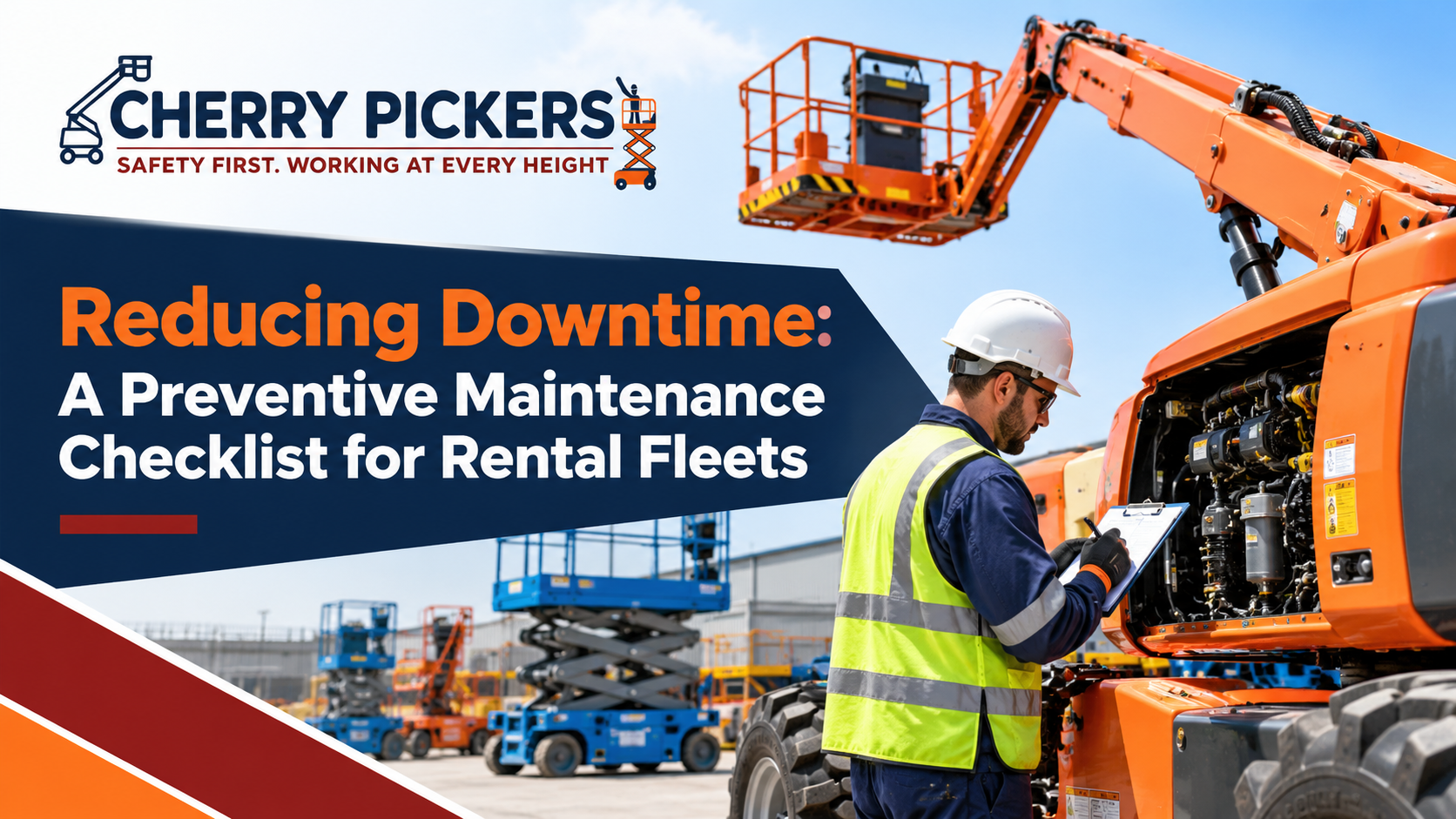
Reducing Downtime: A Preventive Maintenance Checklist for Rental Fleets
For any company operating a fleet of boom lifts and scissor lifts, downtime is the real cost center, not the repair bill itself, but the idle machine, the delayed job, and the crew standing around waiting for equipment that should have been working. Most of that downtime is preventable. This checklist breaks down what a solid preventive maintenance program actually covers, and why skipping it costs far more than it saves.
Why Preventive Maintenance Matters for Rental Fleets
A rental fleet lives a harder life than a single machine on one site. Different operators, different terrains, different load patterns, and the fleet has to be ready to go out the next day, every day. Waiting for something to fail before fixing it means unplanned downtime at the worst possible moment: mid-rental, on someone else's job site, with your reputation on the line. Preventive maintenance shifts that risk from reactive to scheduled, catching faults in the yard, not on a client's site.
The Preventive Maintenance Checklist
1. Daily pre-operation checks
- Visual inspection for leaks, cracks, or loose components
- Tyre condition and pressure (or track condition on tracked units)
- Battery charge level and connections on electric machines
- Controls, emergency stop, and horn function tests
- Platform guardrails, gates, and harness anchor points intact
2. Hydraulic system checksion checks
- Fluid levels and condition (look for contamination or discoloration)
- Hose and fitting inspection for wear, cracking, or leaks
- Cylinder seals checked for seepage
- Filter condition and replacement on schedule
3. Electrical and battery maintenance
- Battery terminals cleaned and checked for corrosion
- Charge cycles monitored to avoid deep discharge damage
- Wiring harnesses inspected for chafing or exposure
- Warning lights and diagnostic codes reviewed before dispatch
4. Structural and mechanical inspection
- Boom and scissor arm welds checked for stress cracks
- Pins, bushings, and bearings inspected for wear
- Outriggers and stabilizers tested for full extension and lock
- Chassis and axle condition assessed
5. Safety system verification
- Load-sensing systems tested and calibrated
- Emergency lowering function confirmed operational
- Tilt alarms and proximity sensors checked
- Platform overload cutoffs verified — see our guide on operating MEWPs safely in UAE summer conditions for how heat and wind affect these systems
6. Scheduled servicing intervals
- Oil, filter, and fluid changes at OEM-specified hours
- Grease points serviced on schedule
- Annual thorough inspections and load testing completed and documented
- Service history logged against each unit's serial number — this is exactly what an Annual Maintenance Contract is built to track
7. Post-rental inspection
- Full inspection on return before the machine re-enters the fleet
- Damage assessment against the pre-rental condition report
- Cleaning and readiness check before the next dispatch
Why This Reduces Downtime, Not Just Extends It
A checklist followed inconsistently is worse than no checklist at all, because it creates false confidence. The value comes from three things working together:
- Catching small issues before they become site failures. A worn hose found in the yard costs an hour. The same hose failing on-site costs a service call, a stalled crew, and a client relationship.
- Predictable scheduling instead of surprise repairs. Servicing on a fixed interval means the fleet team can plan around it, rather than pulling a machine out of rotation unexpectedly — this is the core idea behind an AMC.
- Documentation that protects the business. A logged service history isn't just good practice; it's what proves compliance during audits, insurance claims, and client due diligence checks before a big contract, in line with OSHA's aerial lift requirements and ANSI A92 platform standards.
Frequently Asked Questions
How often should a rental fleet machine be serviced?
Service intervals follow OEM guidelines and vary by machine type and usage hours, but daily pre-operation checks, scheduled servicing at manufacturer-set intervals, and a full inspection on every rental return are the baseline across most fleets.
What's the biggest cause of unplanned MEWP downtime?
Most unplanned failures trace back to a missed service interval or a small fault — a worn seal, a low battery, a loose connection — that wasn't caught during routine inspection.
Does preventive maintenance really reduce costs?
Yes. Scheduled maintenance converts unpredictable repair costs into planned expenses, and it catches faults while they're cheap to fix rather than after they've caused a breakdown mid-rental.
Who should be responsible for the checklist, the operator or the fleet owner?
Both. Daily pre-operation checks are typically the operator's responsibility before use, while scheduled servicing, structural inspections, and documentation sit with the fleet owner or maintenance provider — read more in our AMC breakdown.
Why Choose Cherry Pickers Equipments
Every machine in our fleet is maintained to OEM schedules and inspected before it goes out to a client, because a rental-ready machine has to actually be ready. Our engineers handle scheduled servicing, structural inspections, and post-rental checks so downtime stays in the yard, not on your job site. Looking for a rental partner that maintains its fleet properly? Browse the Cherry Pickers Global fleet or contact our team, serving Dubai, Sharjah, and Abu Dhabi.